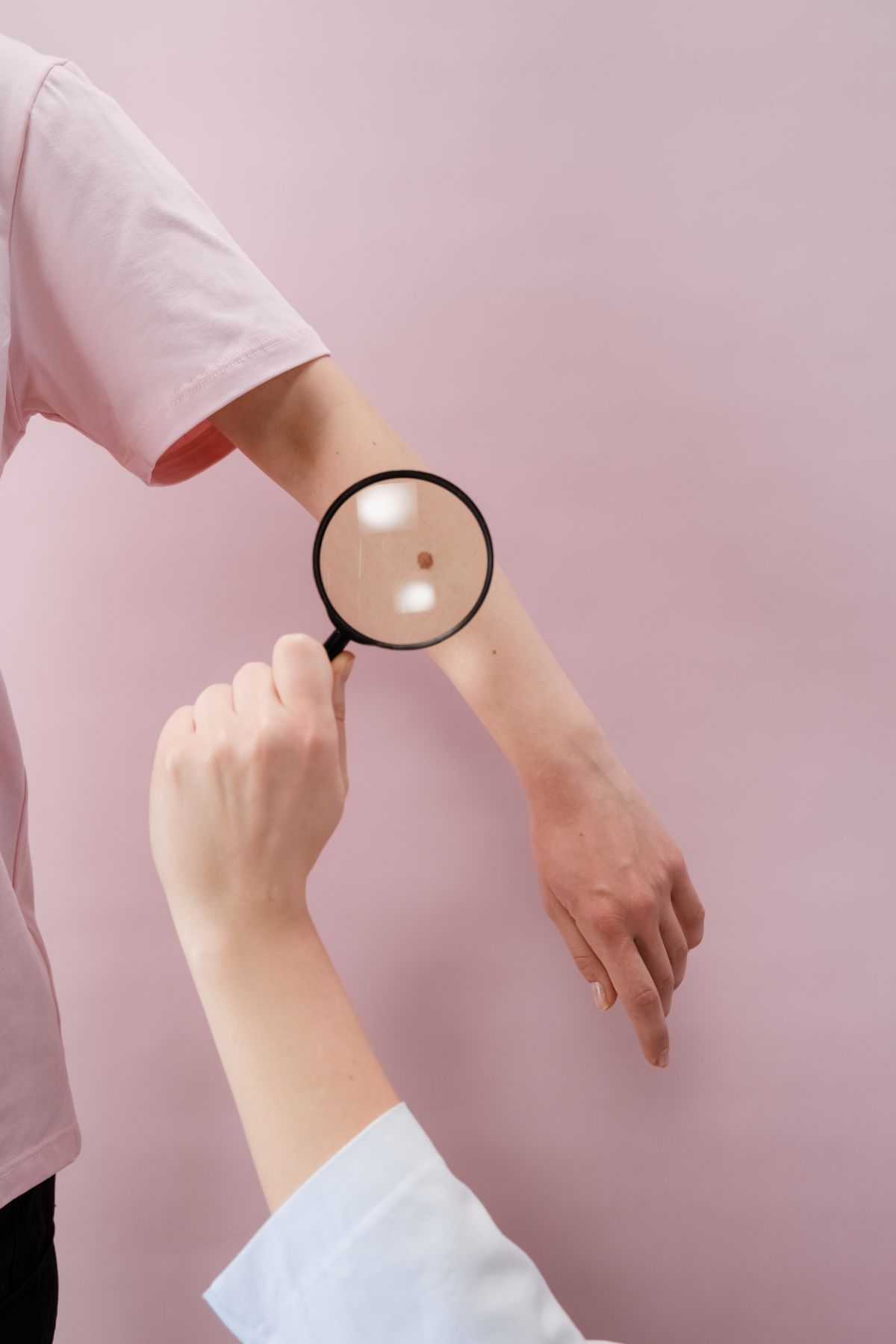
Skin cancer is the most common cancer in the United States — and among the most curable, when caught early. Melanoma detected at the earliest stage has a survival rate above 99%. Found late, that number drops sharply. The bridge between those outcomes is a 15-minute screening, once a year.
Who should be screened?
Everyone over 40, annually — and sooner if you have fair skin, a history of blistering sunburns, more than 50 moles, a family history of melanoma, or an outdoor occupation. Arizona's year-round sun means our patients accumulate meaningful UV exposure faster than most.
What actually happens
- History. We review your sun exposure, family history and any spots you've noticed changing.
- Full-body mapping. Using dermoscopy — a lit magnifier that sees beneath the surface — we examine scalp to soles, including areas you'd never check yourself.
- Photography. Suspicious moles are photographed and measured so year-over-year change is objective, not guesswork.
- Biopsy only if needed. If something looks atypical, a quick numbed sample gives a definitive answer within a week.
The ABCDE self-check between visits
Monthly, look for moles with Asymmetry, irregular Borders, varied Color, Diameter over 6mm, or anything Evolving. New dark streaks under nails, sores that don't heal in three weeks, and changing freckles all deserve a prompt call — don't wait for your annual.
Prevention still wins
Screening catches cancer; sunscreen prevents it. Daily SPF 30+, reapplied every two hours outdoors, wide-brim hats, and shade between 10am and 4pm remain the highest-value habits in dermatology.
Due for your annual? Screenings take 15 minutes and most insurers cover them fully — call (480) 555-0112 to schedule.

